The method

The sound system underneath the words.

English fluency isn’t about knowing more words. It’s about hearing — and using — the structure native speakers rely on without thinking: word stress, reduction, linking, intonation and rhythm.

Most professionals who reach out to me already have strong grammar and a wide vocabulary. What’s missing is the part almost no one teaches directly: how English actually sounds in real time, and how to produce that sound yourself under pressure.

An open notebook with an English sentence marked up with stress dots, linking arcs and a pitch line

Try it

Three phrases. Five patterns.

Turn each pattern on and off. Then press “Play the beat” under Rhythm to hear how English keeps time.

What do you want to do?

Heard at full speed, it can sound like one long word.

Five patterns, one sentence

Tap a pattern to reveal the structure underneath the words.

The five pillars

What your ear has been missing.

These five patterns work together. Each one shapes how spoken English carries meaning at speed — and each one is learnable. They’re the five pillars of English Under Pressure.

  1. 01

    Word stress

    How English highlights what matters

    Not every word carries the same weight. A small number of stressed words carry the core meaning, while the rest of the sentence supports them. Listeners aren’t trying to hear everything equally — they’re listening for where the stress lands.

    From chasing every word to tracking the stressed ones.

    we need to finish the report by Friday

    we NEED to FINish the rePORT by FRIday

  2. 02

    Reduction

    How English stays fast without losing meaning

    Spoken English contains less sound than most learners expect. Predictable words and familiar structures are reduced — not because speakers are careless, but because listeners already anticipate them.

    Reduction isn’t loss. It’s how English preserves meaning at speed.

    going to · want to · and

    gonna · wanna · ’n’

  3. 03

    Linking

    How words become flow

    In natural English, words are rarely spoken in isolation. Sounds connect across word boundaries so speech feels continuous rather than choppy. Listen for clear gaps between words and fast English sounds blurred; listen for the connections and it becomes coherent.

    Meaning travels through connections, not isolated words.

    check it out

    che-ki-dout

  4. 04

    Intonation

    How speakers signal intention

    Rising and falling patterns signal questions, certainty, contrast, openness or closure. When those patterns are unfamiliar, English can sound flat or ambiguous — in what you hear, and in how you come across.

    A fall says “decided.” A rise says “still open.”

    Yes? ↗ (asking)

    Yes. ↘ (decided)

  5. 05

    Rhythm

    The timing framework of English

    English is stress-timed: stressed syllables arrive at fairly regular intervals, and everything in between compresses to fit. Expect evenly spaced syllables and fast English feels chaotic; feel the beat and it becomes predictable.

    Rhythm isn’t style. It keeps meaning organized at speed.

    CATS · CHASE · MICE

    the CATS have been CHASing the MICE

Diagnosis first

It isn’t always a vocabulary or confidence problem.

In a fast meeting, knowing the answer is only part of the work. You’re also following the discussion, deciding what matters, organizing your response and finding the words. The breakdown can happen at any of these four points — and I identify which one before we fix anything.

  • Listening

    People speak at natural speed, interrupt and overlap — and you lose the thread while you’re still decoding the last sentence.

  • Finding the words

    You know the word. Under pressure, it simply arrives too late.

  • Structuring the message

    You build the whole sentence before you speak, and by the time it’s ready the moment has passed.

  • Delivery

    Your point is right, but flattened stress and rhythm make it harder to follow — and less certain than you are.

60-second self-check

Where does your English break down?

Eight statements, no scores. You’ll see which of the four breakdown points to start with — and what we’d work on.

Tick everything that sounds like you.

Runs in your browser. Nothing is saved or sent.

Gilliane mid-explanation, using her hands to show the timing of a phrase

How we work

Not more rules. The mechanics, applied to your real situations.

  1. 01

    Diagnostic

    We identify exactly what’s breaking down — listening, finding words, structure or delivery — before we try to fix it.

  2. 02

    Practical

    Changes you can hear within weeks, not years. Not more rules: the mechanics of spoken English.

  3. 03

    Applied

    Practice built around your real meetings, calls and presentations — fast discussions, unexpected questions, interruptions and pushback.

“For listening, I use a framework built around intonation, word stress, linking, reduction and rhythm. These patterns help you recognize familiar words at natural speed — and help listeners follow how your message is organized.”

— Gilliane
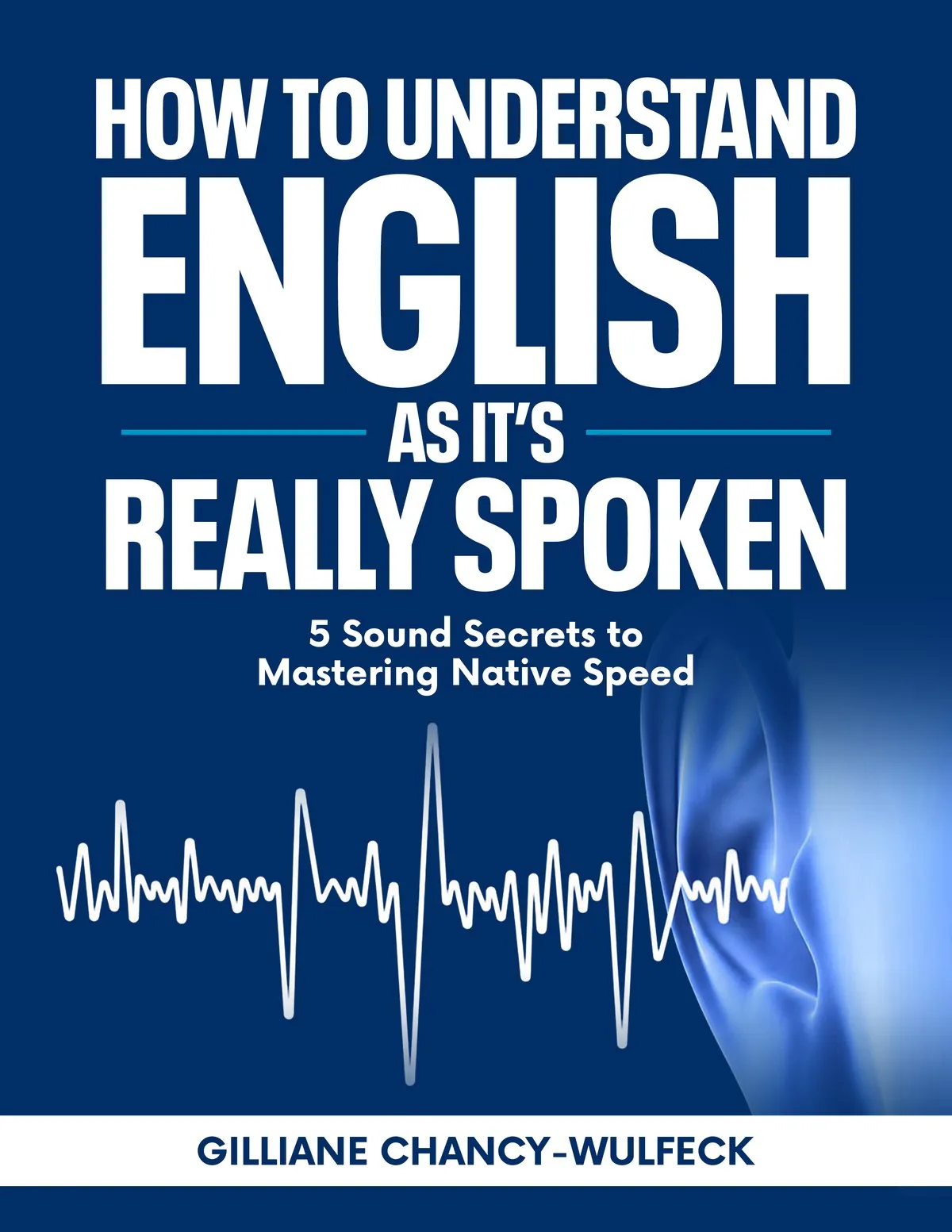
Cover of the free guide “How to Understand English as It’s Really Spoken: 5 Sound Secrets to Mastering Native Speed” by Gilliane Chancy-Wulfeck

Free guide

How to understand English as it’s really spoken.

5 Sound Secrets to Mastering Native Speed. A short guide for professionals whose English is strong, but who find that meetings, calls and fast discussions take far more effort than they should.

  • Why fast English feels confusing, even when your level is high
  • The hidden sound patterns that make native speech feel so fast
  • How to stop losing the thread in meetings and calls

Just your name and email. No phone number, no spam — unsubscribe anytime.

Your next step

Find out where your English breaks down.

On a free strategy call we’ll look at the situations you actually face — fast discussions, unexpected questions, interruptions and pushback — and where the breakdown is happening.